The key to life is not accumulation. It's contribution. Hands that serve help more than the lips that pray.
Showing posts sorted by date for query NIVIUK Artik-R. Sort by relevance Show all posts

Tuesday, July 22, 2025

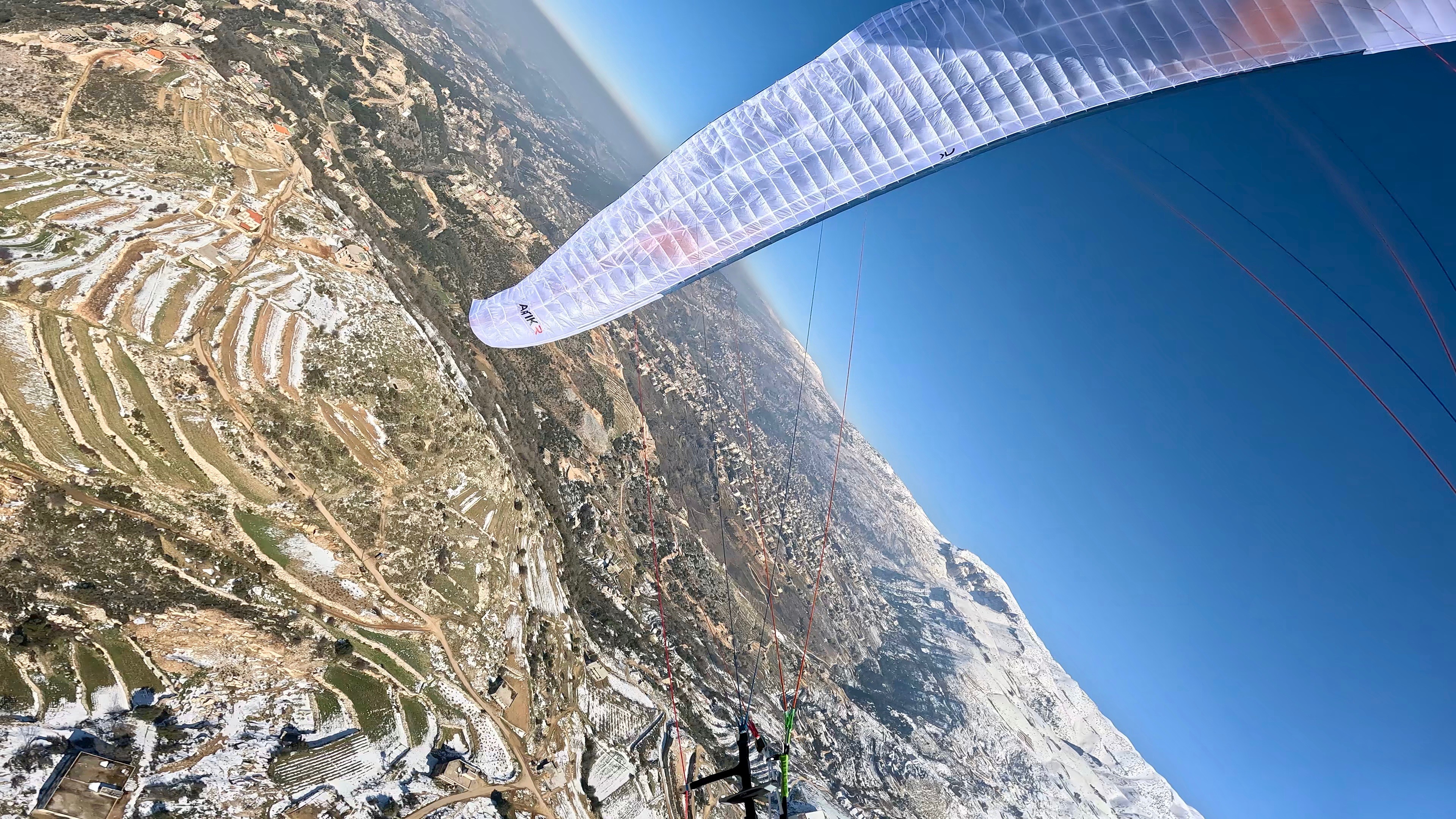
Niviuk Artik R 2 size 23


NIviuk Artik R 2 size 23

I have already flown all Artik series, from the first one to this year's 2025 model, and now I have the Artik R 2, the new release two liner EN-C glider from Niviuk.
In this review, I will describe the glider and highlight the differences between the Artik R1 and R2, as well as the Artik 7 P, a hybrid released in 2025.

The Artik R2 construction and details are flawless, just like Niviuk's latest models. With a very nice manufacturing process, it looks clean, like a Swiss watch. Or should I say like a Spanish Andalusian Flamenco :-) To stay close to the origin ;-)
The glider invites you to fly it, just by looking at it. The outer bag and the small details are elegant. 

The A-R2 has an aspect ratio of 6.5, and even in no wind, it requires a steady but smooth pull if you lay it properly. In a 15 km/h wind, the launch is also smooth, but you feel that the Artik R2 doesn’t rise as a block; it needs a controllable but easy and smooth touch to get that structure above your head, especially if the breeze at the take isn’t steady. It stays within the C class in launch control. 

The structure is different from the first Artik R version. There has been a high amount of work inside that glider, and it feels that way. It feels more compact, but in like three pieces. Let me explain: It doesn’t feel like one whole block, like some stiff, high-end C gliders. It feels more like three stiff parts working together.

The take off is immediate at 92 all up on the size 23, which has a range of 75-95 all up.

First, the brake travel is short and a bit firm. The A-R1 had longer brakes. The A-R 2 has shorter ones, which are direct but have a performance radius. I think it is pretty logical to make such a turn if you are going to use that glider in XC. Otherwise, you can get the A-7 P, which has slightly more dynamic and joyful characteristics, as well as quicker turns.  Saying that the A-R 2 has a precise brake and good authority for the pilot, a bit better than the Artik R-1, especially in strong air. You can turn it with 10-15 cm in all conditions. However, lowering a bit to 20-25 is doable, but a bit harder under pressure. 

Climb rate:  I think the best feature of the Artik R-2 is its climb rate. I think it's brilliant. In weak, and in strong, the A-R2 shoots quickly upward! In my C comparison, I think the rate of the climb would be at the top Cs of
Today's Gliders. 

Stability: In strong air, the old AR-1 structure moves within itself. The new A-R 2 shows a significant improvement over the first version. While it still has some minor movements, it is more taut than the previous version.
In turbulent and intense conditions, the A-R 2 is a different beast from the first version. It is a step up in feeling like positively flying in a higher class without the workload.  

Glide: We did some long glides with a Photon of the same size and load. Perhaps the A-R2 has a 0.25 km/h lower trim speed, but at full bar, it is as fast as, or possibly 0.5 km/h faster than, the Photon. The glide at trim and top speed is within the top 5 of the C category. 

While pushing the speed bar, which has moderate pressure, the B handles are efficient, not hard to control, have good pressure, and are easy to use overall. 

IMHO, the A-R 2 in size 23 is best flown near 92-93. I think after a few more hours, that glider will settle, and you can load it to 94 and stay connected with all its features.
My C comparison will be shortly updated for small details.


Conclusion: More compact than the A-R1, better coordinated handling for performance gain in a turn. Relatively easy/moderate for a 6.5 AR glider. Has much top-end speed. Easier to fly than a few high-end Cs.

Sunday, March 16, 2025

New gliders !!!

 There are lots of interesting newcomers!  :-)

I'm trying to get those:


OZONE Delta 5  / 2-liner EN-C

OZONE Light harness 

NIVIUK Artik R 2  / 2-liner EN-C 

BGD Cure 3  /  2-liner EN-C 

NOVA Vortex  / 2-liner EN-C 

GIN GTO 3. / 2-liner EN-C 

MacPara Eden 8 /  EN-B 


Wednesday, August 2, 2023

NIVIUK KLimber 3 P size 21


Disclaimer:

Please note again… that tests will always differ with other sizes. At first, if flown with seatless harnesses, or must I say a completely different harness. Also if the same sizes are flown at different loads, lighter loads will get the weakest climb but will be penalized in control in heavy air or pushing through a heavy airmass. Bigger sizes have more gliding performance and also better climb in weak conditions.  In my small tests, I always state the size, the total flying weight, and afterward IMHO, the optimum weight I found in that particular glider.


NIVIUK KLimber 3 P


Glider: Klimber 3 P size 21 for a certified weight range of 73-93, and NIviuk stated its optimum weight is 84-90.

Harness used: Woody Valley X-rated 6 size XL, slightly modified to fit my taste. 

Test flown at 88, and 92 all up. 


TEST:

Here is the new super light competition/hike and fly EN-D paraglider from NIVIUK. 

After my test on the Advance Omega ULS, I will give my thoughts about the two gliders in the air. 


At first, I cannot begin before I comment on the beautiful construction and details that were made on that Niviuk glider! Guys…really impressive! From the delivered light black/orange bag that holds the Klimber3 to that precise sewing of the  N10 DOMINICO TEX CO that is used both on the upper and lower surface. The profile and diagonals are made from Porcher 70000 E91.  It weighs less than 3.0 kg as announced! Here's the link for the details: [url]https://niviuk.com/en/klimber-3-p[/url]

Laying it on the ground imposes gentle handling, as it has even lighter cloth than the Omega ULS. The Overall construction with the nitinol rods, and the risers, is nothing but excellent! A really beautiful piece of equipment! 


The Klimber 3 rises smoothly and effortlessly without any wind. It is one of the easiest 7-aspect ratio gliders to inflate. 

Flying the Klimber 3 at 92 all up, in turbulent conditions gave me a complete idea about its usability. After a few hours, I think considering the 7 aspect ratio, the Klimber 3 P is an easy EN-D to handle. Of course, it needs slightly more active pilot control than the 2 liners C’s, but still easy for a D. It resembles the Omega ULS with perhaps a little more movement inside the glider. The Kimber 3 moves slightly more in itself but is still very easy to manage. 

The brake length is shorter than the Omega ULS and as agile.  The pressure on the brakes is slightly firmer than the Omega ULS, but still on the moderate side. I think that pressure is perfect. 

I can say that the authority given by the brakes in turbulent air is quite nice, enabling the pilot to place it accurately in tiny cores. I liked the Omega ULS turning abilities, but I can tell you that I also enjoyed very much the shorter and sharper brake authority on the Klimber 3 as the responses were immediate and quite satisfying. I’m really lucky to be able to test-fly those new light gliders.


If you have flown the Artik R, and understand how it flies in the airmass, how it moves, how it enters thermals, then you will immediately understand the Klimber 3 behavior which has the exact feel but with more than 25 % workload. NIVIUK gliders have their own flying characteristics. The Klimber 3 like the Artik R, just slows slightly before entering the thermal, but the climb is quite nice for the category. In weak, and strong air, it is quite satisfying even at 92 all up on that size. If flown at 88, it will still fly as well but slows slightly more before entering. 


Please remember that those super light gliders, are built with lots of optimizations to reduce weight to let you carry the little possible and let you extract the maximum of their abilities. So don’t expect them to perform like the X one for example! But they will deliver high-end performance for that special light EN-D class especially when you push the speed bar. 


The speed travel of the Klimber 3 is quite long and delivers a higher top speed than the Omega ULS. The glide at 57 km/h is quite competitive. I think I will mix and update the 2 liner C comparison and add those lights D’s inside…Just to get an idea…(soon…)


While on the speed bar, the B steering has a moderate pressure similar to the Omega ULS and is quite efficient to keep the Klimber 3 on track.  Flying at 75 % of the speed bar, the Klimber 3 profile seems taught, and the speed is quite usable. 


Lots of stored energy inside the glider to play around, as it is addictive! but it is better not to get used to throwing it around too much!  


Ears with outer B’s are efficient, stable, and reopen quickly. 


Conclusion:

The look and the streamed line are very beautiful! the handling is sharp, precise, and joyful! It is a relatively easy 2 liner EN-D for that class of pilots. If carefully chosen, the complete package harness and glider, Vario, phone, helmet, water, and chocolate…will not exceed 7.5 kg!  A blessing of perfection, if you can fit in your weight!   

If you can…exciting moments await!  Happy flights :-) 


Wednesday, April 26, 2023

NIVIUK PEAK 6 22


NIVIUK PEAK 6 22 

Having flown practically all Peaks! 1-2-3-4-5, and Icepeak 6, here’s the 6th version with 7 aspect ratio.

The leading edge holds a moderate shark nose, and as usual, the construction, to the smallest details is excellent on this Peak 6.

I flew the Peak 6 at 94 and 97. I think around 95..96 is an optimum weight in all conditions for glider reactions through the airmass. If you want a more faster glider through the air, 98…99 could be great. 


Launching the Peak 6 is very straightforward, without any delay. The rise is homogenous, and moderate without any hard points. No shooting forward with little brake control, and even with windy take off the pilot has the authority of control. Overall very easy launch for that 7 aspect ratio 2 liner D. 


In the air, the biggest difference between the Peak 5 and the Peak 6 is the shorter, more responsive brake travel even in turbulent air. The Peak 6 has a moderate to slightly hard brake pressure than the Peak 5 and the Artik-R. The authority on the brakes in turbulent conditions is very good under the Peak6 giving the pilot complete control.  Smooth turns can be made with good agility for that class. It could be as quick to turn as the Artik-R if you open the chest strap to 50 cm on the Arrow harness. This authority of the brakes gives the pilot swift control for any movements under the Peak 6. 


Immediately after taking off, I could feel the high comfort under the Peak 6! This glider has perhaps the double comfort found on the Peak 5!  And more comfortable to fly than the Zeno1-2, Magus XC, Peak 3, Peak5, and Icepeak 6. I think the Peak 6 has the DNA of the Peak 4 and matches its comfort with an even more solid, homogenous structure. When flying it in strong air I felt that this whole structure didn’t lose its homogeneity and was kept as a block above my head. Even if the Artik-R stretches a bit and wobbles in heavy air, the Peak 6 felt more coherent! Of course, the pilot level is another step from the Artik-R but just to precise that solid feel.


The roll movements are also much more dampened than the Peak 5, Zeno2, and resembles surprisingly the Peak 4 ones. I found out that flying it with the Arrow enhanced the turning ability, and the roll is very controllable. 

The Peak 6 pitch behavior is also neutral. It doesn’t shoot forward in moderate thermals. Just perhaps it slows and sometimes bumps a bit before entry, but still enters slowly the climb and moves upward. I found that the best way to dig through is at first to load it at the top (98) and to trust it, by releasing the brakes as much as it would be possible.  That will help a faster entry. I also noticed that flying it at the very top end 98 will help reduce the bump feel. Overall, the Peak 6 is a really comfortable glider to fly for a 7 aspect ratio 2 liner in the D class. 

Loading it at 98 will get this structure to be even more indestructible, and it could be a nice tool for achieving local competitions or getting the most in your strong XC days. 


In weak conditions, even at 96 all up, I felt that the Peak 6 climb well, and I could squeeze it in a very narrow small core. Opening the chest strap at 50 cm on the Arrow harness helped a lot by making it very agile in turns. 


The glide at trim and accelerated is excellent, for the category, with a very taught leading edge even at full bar.  I could get 18-19 km/h over trim.  The B controls are quite a big step in usability over the Peak 5! I could control the glider with a moderate pull, while on bar. The pressure on the B steering is moderate and very usable. Forget about the Peak 5 controls and feel…The Peak 6 is a completely changed glider. 

I flew next to a Zeno 2 the same size and loaded in windy and strong turbulent air.  While the racing genes of the Zeno 2 felt more dynamic and surged through the air more aggressively going forward, especially on windy days,  the Peak 6 while having a very close glide, and climb, is aimed more toward a calmer efficient cross-country use. It surfs the air calmly and moves forward with slower reactions. 

In normal conditions, without too much wind, the Peak 6 feels and handles like a slightly lower-rated glider, but with D-class performance.  For pilots aiming for 100 % cross-country use, the Peak 6 will deliver with less energy management. 


Stepping on the bar on long, lift lines while B steering felt easy and controllable with a very good glide angle. The pressure on the B controls are moderate with swift input. Ears with outer A’s are stable and reopen with pilot assistance. Ears with Outer B’s are also doable, easy, stable, and reopen quickly. Getting wing over on the Peak 6 lets you feel that energy! After two turns they became really high. The exit is easy as the 360 ones. The Peak 6 felt very homogenous.


Conclusion: 

 After test flying the Peak 6, I think NIVIUK wanted to revive the Peak 4 success by creating a comfortable, easy, confidence-inspiring, EN-D 2 liner. I think pilots upgrading from the Artik 6 with 2 full seasons in strong air, could be a logical move toward an easy, but much more performant EN-D glider.  


Thursday, March 9, 2023


NIVIUK Artik-R   size 23


If you already read my previous test about the Artik 6 , then you surely felt that I really appreciated that overall complete glider. Now as the C certification allowed the use of collapse lines and other changes, Niviuk released to the market their new C class model, with its 2-line version and with a 6.5 aspect ratio. 


I have flown the size 23 which is certified from 80-95, and NIVIUK recommends the optimum flying weight of 87-92.

I flew that glider at 88- 92- and 95 all up on my X-rated 6 harness. 

The Artik-R has a really nice construction and the finishing details are really impressive. I think NIVIUK has made it a step further in delivering a really neat high quality product which is clearly shown when you unbox it. 


Launching :

Pulling on the A’s on the Artik-R at 92 all up, gave me a little heavy feel at the beginning of the rise, than normal in the middle rise, with very easy take-off behavior even in no wind. The take-off is immediate without the wing surging in front.  In a stronger breeze, the Artik -R can be easily mastered by the brakes, and there is no surging forward for a C pilot, rather than an immediate take-off. Overall take-off behavior is quite nice. 


Pitch and roll stability:

In the air, and later in different conditions, the pitch felt very stable, getting inside the lift is super comfortable even smoother than the Artik 6 which had a slightly more positive pitch feel. The Artik-R slows very slightly when encountering thermals. The roll stability seems very close to the Artik 6. Overall they felt close in comfort with probably +10…15% pilot demand in turbulent air for the Artik-R.  It is not summer yet to be precise, but it feels quite balanced. 

 The Artik-R has a taught and solid leading edge. Trying to pull the A’s showed me a logical heavy pressure, as the A’s are far back.  


Climb rate:

I flew the Artik-R in a very weak lift (+0.3 m/s) with no wind influence, at 93 all up, and I was really efficient with the best C gliders, or even D’s, to confirm after a while that the climb is in weak is really good! The Artik-R could float really well! In stronger thermals or with more wind, the Artik-R behaves calmly in pitch, and needs slightly more time to enter, but with a fairly good climb rate for the category.


Gliding power:

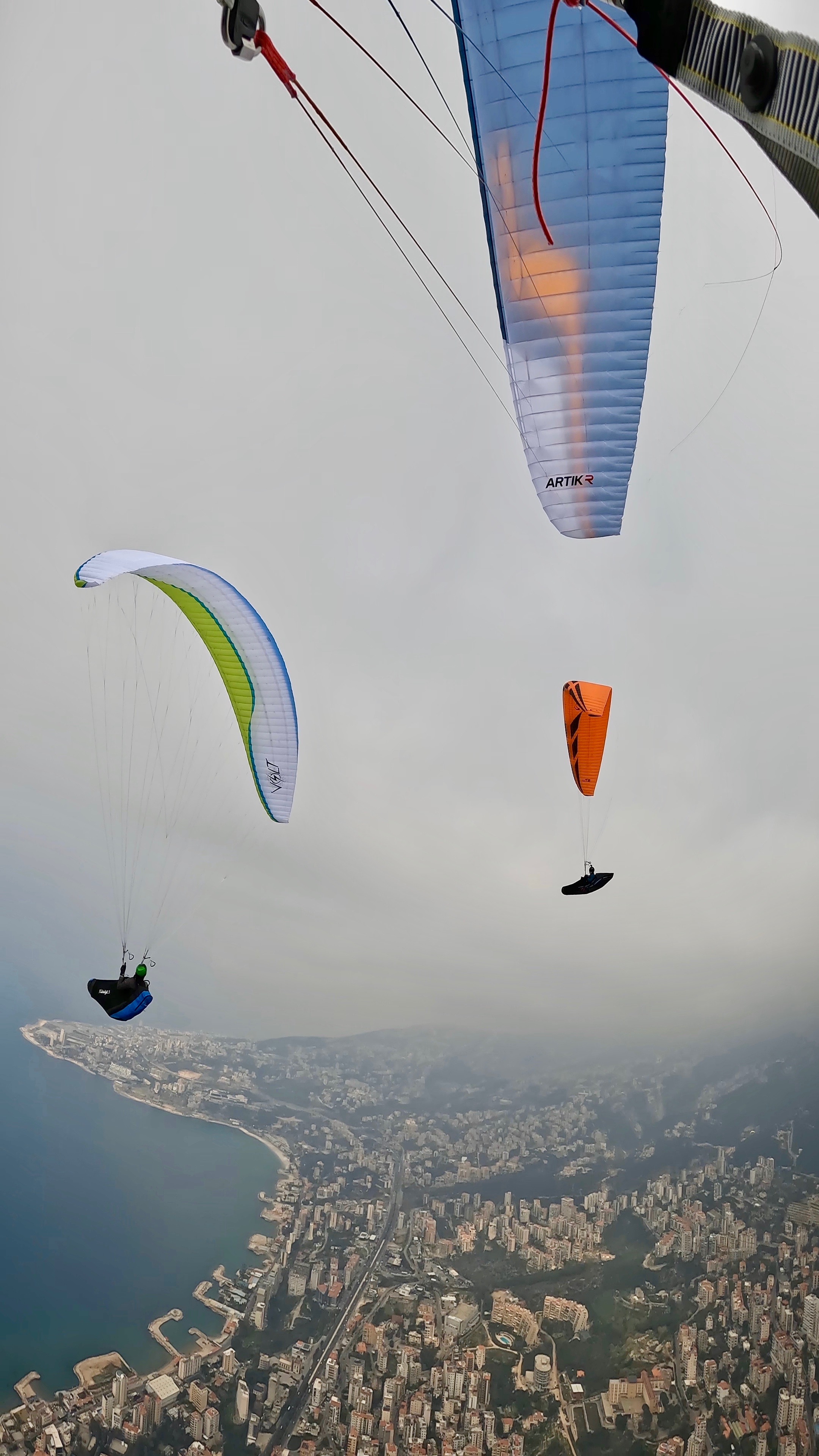
For two days, I had the privilege to fly with my friends on 2-liner C gliders!  Yann, on a Volt 4 M size max 102, Elie and I  (alternating) Artik-R and LT2. 

After many glides, we all had the same conclusions! 

The Artik-R holds now the crown having the top glide ratio for the 2 liners by a small margin, especially at full bar which is impressive!  


So I decided to try another very good 2-liner EN-D glider. (A Gin Leopard. But a bigger size ‘M’ was only available! ).  I know it is not fair to try it with the higher class but just an idea for me and also many pilots suggested that I try…

To be precise, the glide in ‘calm air’ at trim is similar. The glide at bar seems also incredibly similar!  The Artik-R showed me a true gliding machine for the C category. 

In turbulence and wind, or in the valley breeze, the Leopard with its 7 aspect and thinner profile had the edge of course with a high capacity in getting through and moving forward and up easily which is logical. 

I will hopefully try the Leopard with NIVIUK’s new 2-liner EN-D, the ’Peak 6’. A wing of the same class as the Leopard. 


Handling and pleasure:

The brake length of the Artik-R is slightly longer than the Artik 6, but it still with good agility. Not as sharp as the A6 in turns, but still good enough to be satisfied. Smoother in turns than the A6, as I was able to core every single thermal easily. The Artik-R doesn’t dive in turns as the A6. It turns more efficiently flat without losing the core. 

Throwing wingovers, and playing around on the Artik-R could also be playful, but it was engineered to be an efficient XC tool, getting the most out of the present lift. 


Flying the Artik-R in XC and transitions at bar is very efficient for the class. The B controls have a moderate pressure, slightly less than the LT2, with a swift response making it very easy to keep the glider overhead.  The leading edge kept its pressure in all my testing, and I was completely satisfied with the complete package.


Ears are stable, and the descent rate with half bar is around -2.5 m/s… -3 m/s, they reopen with pilot intervention. I also flew the Artik-R at 88 all up to be able to comment. It flies and handles a bit slower. It is safely doable if someone wishes., but to be efficiently competitive, I personally prefer to fly the size 23 at +93 all up.  I personally like my gliders to feel more dynamic and also I need more connection in strong air.  

Flying the Artik-R at 95 won’t lose anything in weak thermals, and would be better in getting faster into the heavy airmass.

360s needs two turns to get smoothly into it. Getting out while keeping your weight shift inside the turn is smooth like any other C. 


Conclusion: 

Today, manufacturers are trying to satisfy a large group of pilots from the high B's to the high C’s but some are resilient to deliver a suitable and comprehensive 2-liner for the C category. The Artik-R seems to have filled that gap comfortably.  

But there’s no miracle! In the 2-liner EN-D category, the Peak 6 for example was created to give you more performance with a higher pilot level. 

With the Artik-R, you are flying a 2-liner with near the comfort of 3-liner C’s. Perhaps around a +12 % increase in pilot level in strong air.  


There’s no special flying technique for the Artik-R!  So a confirmed C pilot, or even a ‘confirmed’ high B pilot with two full seasons in strong air, would find the Artik-R to be a nice evolution to fill his goals.  

The overall gliding performance ‘in moving air’ over the 3 liner C’s ‘example Artik 6’  is increased by 10-12 % (just a personal idea) 

Now the clearer advantage is the top speed when overlapping pulleys gives around +18 km/h over trim at 1000 ASL.   

I’m sure a demo would be an exciting and interesting experience! :-)  


Wednesday, March 14, 2018

EN-C comparison UPDATE ( Alpina 3 MS,Alpina 3 S, Queen 2 MS, Sector S

EN-C comparison (Update) 


Easiest to manage in the category. 1 being most friendly user. (Most comfortable to fly for the average "C" pilot): After many flights, some changes occurred…Constant feedback… 

1- Alpina 2 = Advance Sigma 9 = Mac Elan =Nexus = Volt 2 SM = Carrera plus M = Sigma 10 25 = Mac Para Elan 2, size 26 = Alpina 3 MS 

2- ADVANCE Sigma 8 25 = Artik 4 25 = Ozone Delta 3 ML  = Ozone Delta 2 MS

3- BGD Lynx M = Nova Sector S = Alpina 3 S 

4- GRADIENT Aspen 4 26 = Triple seven Queen = Cure M = Supair Taska = Mac Para Elan 2 size 24 = Colt 2 S 

5- NIVIUK Artic 3 = AD Volt 1 SM = BGD Tala M = Cayenne 4 = SOL Lotus one M = Queen 2 MS

6- GRADIENT Aspen 5 26 =U-Turn Passion SM = Carrera = Sky Argos = Skywalk Spice XS 

7- MacPara Marvel 25 = UP Trango XC 2 = Cayenne 5 XS = UP Trango X-race 

8- NOVA Triton 2 S 

9- Trango XC 3 SM 

Handling in rough air: (The one that you can turn even in rough air) loaded at +80 % of their weight range and plus! 

1- Gradient Aspen 4 = Volt 2 SM = Alpina 2 = Sigma 9 = Artik 4 25 = Cayenne 5 XS = Ozone Delta 3 ML = Sigma 10 25 = BGD Lynx M = Alpina 3 MS = Alpina 3 S = Sector S = Queen 2 MS 

2- Nova Factor 2 = Cure M = Artic 3 = Cayenne 4 S = Ozone Delta 2 = Triple seven Queen = Carrera= Nexus = Elan= Triton 2 S = Carrera plus M at 105! =UP Trango X-race SM =Skywalk Spice XS = Mac Para Elan 2 ,26 and 24 

3- U-Turn Passion SM= BGD Tala M = Argos = Aspen 5 26 = SOL Lotus one M = Supair Taska = Aspen 6 24 = Cayenne 4 S

4- OZONE Alpina 1 M = UP Trango XC 2 S/M = Trango XC 3 SM 

5- UP Summit XC2 M = Marvel 25 = Delta 1 M = AD Volt 1 SM 

6- Artic 3 Race = Colt 2 S

Performance in calm air at trim speed (no activity): 

1- UP Trango X-race SM 

2- Cayenne 5 XS = Trango XC 3 = Ozone Delta 3 ML, MS  = Skywalk Spice XS = Advance Sigma 10 25 = Alpina 3 MS = Queen 2 MS

3- BGD Lynx M = Triton 2 S = Aspen 6 24 = Alpina 3 S = Sector S
4-Triple seven Queen M = Cure M = Nexus = Supair Taska S = Mac Para Elan 2, 26 and 24 

5- NIVIUK Artic 3 Race = Volt 2 SM = BGD Tala = Alpina 2 = Carrera = Aspen 5 26 = SOL Lotus one M= Artik 4 25 = Carrera plus M 

6- NIVIUK Artic 3 = U-Turn Passion S/M =UP Trango XC 2 S/M = Ozone Delta 2 = Elan = Argos = Colt 2 S = Cayenne 4 S

7- Nova factor 2 S = Marvel 25 = Aspen 4 26= Sigma 9 

8- Advance Sigma 8 25 & Ozone Alpina M & Ozone Delta M = AD Volt SM 

9- U-Cross S 

10- UP Summit XC2 

Performance at "trim speed" in head wind glides and ‘Average’ turbulent conditions: 

1- UP Trango X-race SM = Advance Sigma 10 25 = Queen 2 MS = Alpina 3 MS 

2-Triton 2 S = SOL Lotus one = Cayenne 5 XS = Trango XC 3 = Ozone Delta 3 = Skywalk Spice XS  = Aspen 6 24 = Alpina 3 S = Sector S

3- BGD Lynx M 

4-Triple seven Queen M = Cure M = Nexus = Supair Taska S = Mac Para Elan2, 26 and 24 

5- Alpina 2 = Aspen 5 = Artik 4 25 = Carrera Plus M 

7- Carrera = Volt 2 SM 

8- NIVIUK Artic 3 Race = U-Turn Passion SM = UP Trango XC 2 = Ozone Delta 2 = Elan 1 = Argos = Colt 2 S

9- Skywalk Cayenne 4 = NIVIUK Artic 3 =AD Volt SM = BGD Tala = Sigma 9 

Performance at " bar " in headwind glides and sudden lifts : 

1- Ozone Delta 3 ML = UP trango X-race SM = Advance Sigma 10 25 = Delta 3 MS = Queen 2 MS = Alpina 3 MS  = Sector S

2- Aspen 6 24 = Alpina 3 S 

3- Triple Seven Queen M =Trango XC 3 SM= Cayenne 5 XS = Skywalk Spice XS

4- BGD Lynx M = Triton 2 S
5- Alpina 2 = Aspen 5 = SOL Lotus one M = Cure M = Carrera plus M =Mac Para Elan 2 26 and 24 

6- Carrera = Elan = UP Trango XC 2 S/M = Ozone Delta 2 = Volt 2 SM = Nexus Supair Taska S 

7- NIVIUK Artic 3 Race = U-Turn Passion SM = BGD Tala= Sigma 9 =Argos = Artik 4 25 = Colt 2 S

8- NIVIUK Artic 3 = Aspen 4 =Cayenne 4 S= AD Volt SM 

9- Nova factor 2 S 

Climb rate in weak but “difficult” conditions < 0.5 m/s (not homogeneous thermals ,low in the inversion) : All loaded at +80 % of their weight range. 

1- SOL Lotus one M = Cayenne 5 XS = Volt 2 SM = Carrera plus M 

2- U-Turn Passion S/M = Ozone Delta 2 ML = Elan 1 26 = Cure M = Advance Sigma 10 25  = Aspen 6 24 = BGD Lynx M = Alpina 3 MS
3- UP Trango XC 2 S/M= Delta 2 SM = Alpina 2 = Carrera M = Alpina 3 S = Queen 2 MS 

4- NIVIUK Artic 3 = Marvel 25 = Aspen 4 = Skywalk Cayenne 4 S = BGD Tala= Carrera S= Argos = Triton 2 S = Sigma 9 = Artik 4 25 = Trango XC 3 SM =Mac Para Elan 2 26 and 24 = Sector S 

5- Artic 3 Race = AD Volt SM = Ozone Delta 3 ML 

6- Triple seven Queen = Nexus = Colt 2 S 

Climb rate in punchy thermal conditions : 

1-UP Trango XC 3 SM = Cayenne 5 XS = Cure M = Ozone Delta 3 ML = UP Trango X-race SM = Skywalk Spice XS =Advance Sigma 10 25 = Aspen 6 24 = BGD Lynx M = Sector S = Alpina 3 MS = Queen 2 MS

2-UP Trango XC 2 S/M = Ozone Delta 2 = Alpina 2 = Carrera M & S= Elan = Sol Lotus One =Volt 2 SM= Carrera plus M = Supair Taska S = Mac Para Elan 2 26 and 24 = Alpina 3 S 

3-U-Turn Passion S/M = Cayenne 4 = Marvel 25 = Artic 3 Race = BGD Tala M= Argos = Triton 2 S = Colt 2 S 

4-Artic 3 normal = Aspen 4= AD Volt SM = Triple seven Queen M = Sigma 9 = Artik 4 25 = Nexus 

Brake description : 

-Ozone Alpina 3 S: light to medium pressure, precise, very agile, turn on command, a delight to fly.


-Ozone Alpina 3 MS: Quite light to moderate brake pressure, nice agility, precise, really easy to thermal, short response.


-777 Queen 2 MS: Medium pressure overall, precise, direct, agile, very good agility inside the core. It keeps inside the thermal easily.
-Nova Sector S: Medium pressure until 15 cm, then slightly harder. It's precise, agile, need weight shift in turbulent small cores for shorter radius to keep it on track.

-UP Trango X-race SM: Moderate , super linear, super precise, exquisite, agile in moderate conditions. Needs slightly more implication in rough air for turning ability. 

-BGD Lynx M. Moderate length and pressure , precise,agile linear, direct. A pleasure to fly!

-Gradient Aspen 6 24. Short travel, moderate pressure, fairly agile, linear, needs active pilot.


-Supair Taska S : Moderate, agile, linear, precise agile in moderate conditions. In turbulent air, it need application to turn. 

-Skywalk Spice XS: Moderate to light, linear, precise, good agility in moderate conditions. 

-Mac para Elan 2 26 (@101 all up) Moderate, linear , fairly agile.

-Mac Para Elan 2 ,24 (@90 all up) Light to moderate, linear, precise, agile, Nice handling)

-Advance Sigma 10 25 @ 96 all up. Linear, precise, agile, moderate pressure. 

-Ozone Delta 3 ML: Moderate to hard, good agility in all conditions. 

-Nexus :Moderate to hard, moderate agility 

-UP Trango XC 3: Moderate pressure, linear, precise, agile is homogeneous conditions. 

-Cure M : Agile, direct, precise, linear. 

-Volt 2 SM : agile, precise, crispy and linear. 

- Cayenne 5 XS: Sharp and very direct, precise, agile even in turbulent conditions, short and efficient! 

- Artik 4 25 : Moderate brake travel, linear , precise, agile . 

- Sol Lotus, Short, moderate to hard, precise, linear. 

-Colt 2 S moderate to light, long, not precise, average to poor agility in turbulent air  

- Triton 2 S, short, direct, linear, precise, average pressure. 

- Aspen 5 26 , moderate brake travel, moderate to agile in turns, light. 

- Sigma 9 Direct. 

- Elan linear and direct, smooth. 

- Argos Linear light to moderate and direct 

- Triple seven Queen M (relatively short and linear, precise, medium pressure,like D2 SM ) 

- Alpina 2 SM (soft,linear,longer than Delta 2 SM ,agile moderate to light pressure) 

- Carrera S (shorter than Alpina SM,linear, precise, agile, moderate pressure) 

- Ozone Delta 2 SM, ML (linear, short ,precise ,agile with moderate pressure) 

- BGD Tala M (Long and linear, fairly precise in turbulent conditions, moderate to light pressure, forgiving) 

- Nova factor 2 S (very direct and precise) 

- NIVIUK Artic 3 (Linear, precise, agile) 

- Skywalk Cayenne 4 S (Moderate pressure, Agile linear, forgiving, smooth!!) 

- Gradient Aspen 4 26 (Agile,moderate,linear,forgiving,smooth) 

- U-Cross S Direct and agile if the conditions are smooth, and a bit less in turbulent ,the glider must settle first) 

- U-turn Passion SM ,light to moderate, linear ,agile. 

- UP Trango Xc2 S/M (medium pressure, precise, fairly agile, short) 

- Marvel 25 (precise, moderate pressure, needs a bit of work in turbulent conditions) 

- Ozone Alpina M (A bit longer than Factor 2 and a bit softer , more precise and shorter than the Delta M and much better turning behavior) 10- 

- AD Volt SM ( Needs a bit time to enter the turn in moving conditions) - Niviuk Artic 3 Race 

- Sigma 8 25 (very close in handling ,a bit long but still agile) 

- UP Summit XC2 M (Long average agility to good) 

- Ozone delta M (Soft, long and average precision)

‘NEW’ 

(Most efficient C glider in overall XC flying ) IMHO 

(1 being best) . 

The one i personally feel that will gave me the most efficient XC for overall use. (ratio of comfort efficiency) 

1-a -Alpina 3 MS  *Best ratio of (comfort and high performance) *

1-b -UP Trango X-race SM 

2- Cayenne 5 XS = Spice = Delta 3 ML & MS = Advance Sigma 10 25 = Aspen 6-24 = Queen 2 MS 

3-BGD Lynx M = Alpina 3 S = Sector S

4-Alpina 2 SM = Cure M    

5-Triton 2 S = Sol Lotus One = Trango XC 3 = Carrera plus 

6-Aspen 5 26 ( very efficient at second bar ! ) 

7- Ozone Delta 2 = Up Trango XC2 = U-turn Passion = Carrera M & S = Elan = Artik 4 25 = Volt 2 SM = Nexus . 

8- BGD Tala M = Niviuk Artic 3, A3 Race, Skywalk Cayenne 4, Mac Para Marvel, Colt 2 S, Ozone Alpina M, AD Volt SM, Triple seven Queen M , Argos, Sigma 9 (Easy and solid) 

Faster at second bar ( if equally loaded ) : 

1- Queen M = Advance Sigma 10, 25 = Mac Para Elan 2, 26 and 24 =Queen 2 MS = Sector S

2- Ozone Delta 3 ML = Artic 3 Race

3- Passion = Cayenne 4 = Aspen 4 = Argos = BGD Lynx M - 

4- Cure M = Delta 2 = Sigma 8 = Alpina 2 = Sigma 9 = Aspen 5 = Cayenne 5 XS = Trango XC 3 SM= Triton 2 S = Sol Lotus One = Artik 4 25 = UP Trango X-race SM = Skywalk Spice XS = Alpina 3 S 

5- Volt 2 SM = Trango XC2 = BGD Tala = Carrera = Elan = Supair Taska S 

Big ears efficiency: 

- Ozone Alpina 3 MS and S : ( stable, efficient, reopen on input)


- 777 Queen 2 MS : moderate stability, they usually flap, shake a bit sometimes, but reopen quickly


- Nova Sector S (stable, efficient ,reopen without intervention )

- Up Trango XC 3 ( stable and ok for a 7:0 aspect ratio glider! ) 

- Cayenne 5 XS ( small -2m/s and stable, little big and un-stable on this size ) 

-Advance Sigma 10 ,25 (with outer A’s little stable, flap a bit, efficient with bar, reopen with a slight brake pull ) With outer B’s (stable efficient with bar, reopen quickly) 

- Cure M (stable ears, efficient)

- Lynx M ( Stable, efficient) 

- Mac Para Elan 2 26 and 24 ( efficient ,stable, needs pilot input to re-open) 

- Ozone Delta 3 ML (easy, moderate efficiency, stable, doesn’t reopen by themselves) 

- Volt 2 SM (stable ears, efficient) 

- UP Trango X-race SM ( doable with A’s and outer B’s. Stable, moderate efficiency, reopen by themselves) 

- Aspen 4 26 (very efficient in big ears) = Nova Factor 2 =Cayenne 4 S = 

- Ozone Delta 2 = BGD Tala = Queen = Alpina 2 = Carrera (stable and efficient)= Sigma 9 =Elan =Argos = Sol Lotus One= Artik 4 25 

Artic 3 = Artic 3 Race = U-Turn Passion SM =Triton 2 S (stable moderate ears ) =UP Trango XC 2 S/M= AD Volt SM = Aspen 5 26 . 

- Marvel 25 (moderate use of big ears-moves a bit)

- BGD Lynx M ( Stable ears ) reopen by themselves.

The Triton 2 S requires much more energy from the pilot to control it in heavy conditions. 

The Lotus one has also some impressive performance, but to place it wherever you want in turbulent conditions requires also some finer inputs. 

The Aspen 5 is really some great glider at second bar! It resembles the Triton 2 S in full speed glide! …To extract the full performance it needs an active piloting for sure and the way to turn it quickly in turbulent cores needs a little time. 

The Cayenne 5 has the edge in surges into thermals, and the superb sharp and direct brake travel! 

In weak conditions, it requires a bit more to handle than the Alpina 2 but it’s a very efficient C glider. If only the ears were a bit more efficient and stable … 

The Trango XC 3 is demanding to fly regarding the surrounding C’s. Of course it’s very efficient in cutting and climbing. The glide is good also but it needs the most energy to handle in this specific category! 

The BGD Cure surprises by the ratio comfort/aspect ratio. The overall package of performance, accessibility and pleasurable feel is very nice. 

The AD Volt 2 SM is a very comfortable glider to fly with a very nice brake authority. The Climb rate is ‘great ! 

The Elan 2 26 is an easy C glider, fast trim, nice glide.

The Elan 2 24 is more demanding to fly than the size 26. 

UPDATE for usability: 

Please remember that sizes differ a lot and surely the loading's! Other sizes may have other characteristics … 

The first 4 places are very close. Indeed superb machines! Different taste for everyone … 

The most important: Only the pilot will make a difference. 

C & D gliders: UPDATED. 

This grade is to say how busy a glider is, in strong conditions, or the one that’s more difficult to manage, comparing to the B category. 

Since this is a very delicate comparison, i must point out that the glider that has quicker authority on the brakes like the Triton 2 will enable a good pilot to keep it swiftly overhead. Some doesn’t have that quick response and in strong conditions they won’t keep the pilot as busy, but he will be the ‘passenger’ for a short lapse of time … 

The grade doesn’t indicate the one that recovers easier or harder!!Only that keeps you busier! Most will have easier recovery than the higher graded! 

Mac Elan M (@98all up) *7 
AD Volt 2 SM @ 90 all up *7 
Swing Nexus (@94 all up) *7.0 
Up Summit XC 3 S (@94 all up) *7.5 
Mac Elan light 24 (@90 all up) *7.5
Mac Para Elan 2, 26 ( @ 101 all up) *7.5 
Advance Sigma 9 25 (@91 all up) *7.5
Ozone Alpina 3 MS (@92 allup) *7.5 
Advance Sigma 10, 25 (@96 all up) *8.3
BGD Lynx M (@ 92 all up)  *8.4
Niviuk Artik 4 25 (@91 all up) *8.5 
Ozone Delta 3 ML ( @ 102 all up) *8.5 
Ozone Alpina 2 SM (@92 all up) * 8.5 
Ozone Delta 3 MS (@92 all up) *8.7
Delta 2 SM size (@ 92 all up) *8.7
Nova Sector S (@96 all up) *8.8  
777 Queen M (@ 101 all up) *9 
Dude Colt 2 S @ 90 all up *9.0 
BGD Cure (@ 93 all up) *9.1 
Aspen 5 26 (@98all up) *10
Mac Para Elan 2, 24 (@ 90 all up) *10
Supair Taska S (@94 all up) *10 
777 Queen 2 MS (@98 allup) *10
Skyman CrossAlps S (@90 all up) *10.5 
Skywalk Spice XS (@90 all up) *10.8 
Skywalk Cayenne 5 XS (90 all up) *11 
Sol Lotus one (@ 98 all up) *11
Gradient Aspen 6-24 (a2 90 all up) *11 
UP Trango Race SM (07 all up) *11.5 
Ozone Mantra 6 SM (@94 all up) *12 
Ozone LM6 SM (@95 all up) *12.2 
Gin Gto 2 S size (@94 all up) *12.5 
Advance OXA 2 @ 96 all up  *12.5
Skywalk Poison X-Alps *12.5 
Up Trango XC3 SM *12.5
Triton 2 in S size (@ 96 all up) *12.5 (M size could be different) ! 
Niviuk Peak 4 23 (98all up) *12.5 
Niviuk Peak 4 21 (@86all up) *13 
Niviuk IP6 26 (@98 all up) *13.5 
Ozone Zeno MS (@98 all up) *13.5 
Ozone R-10 S (@ 98 all up) *15.0 

Cheers, 
Ziad