The key to life is not accumulation. It's contribution. Hands that serve help more than the lips that pray.

Thursday, August 13, 2020

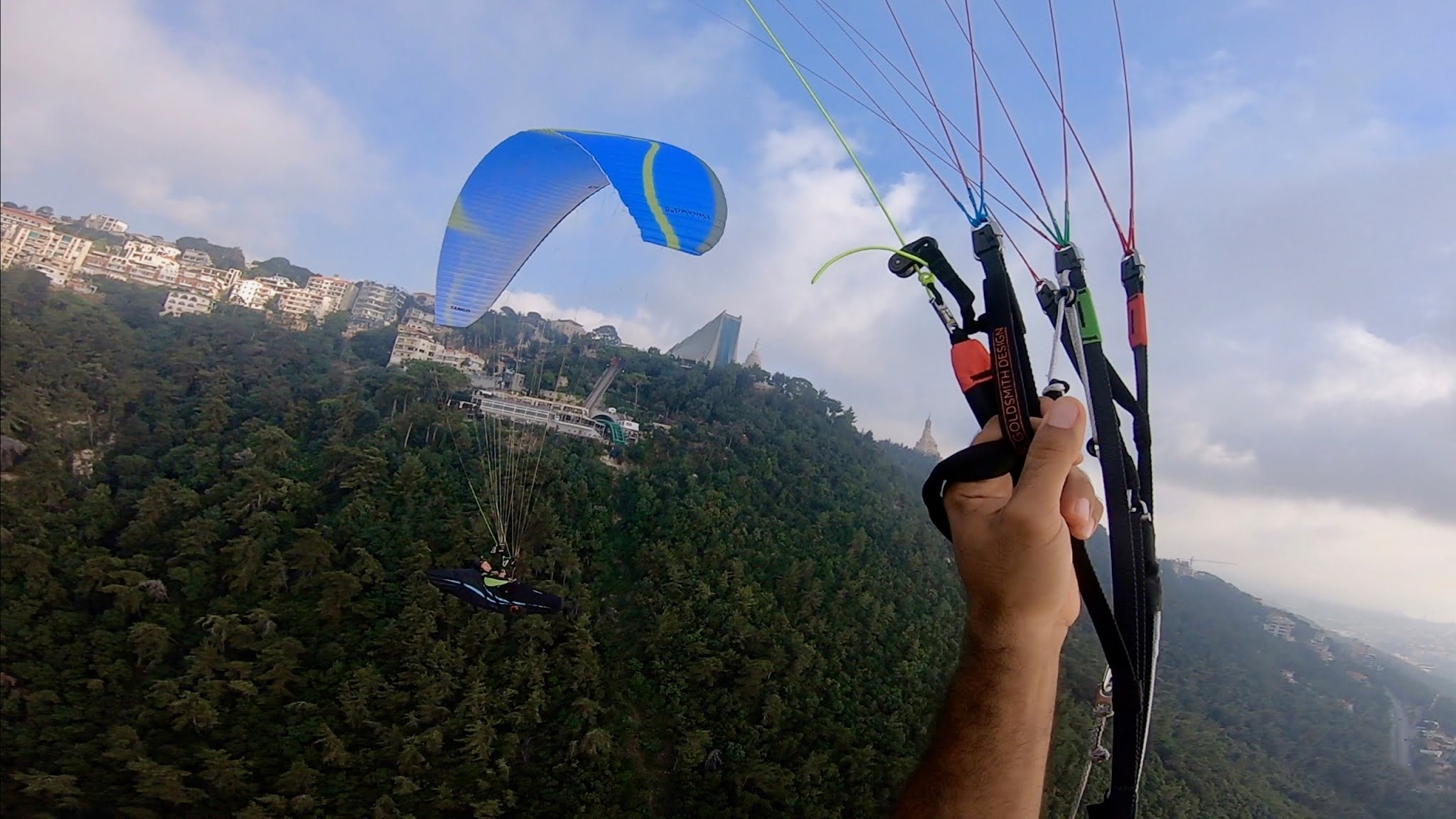
DaVinci Tango EN-C


DaVinci Tango

 let’s dance…


DaVinci is a South Korean manufacturer with a complete set of gliders from the A to CCC category.

The Tango is their new EN-C glider and my first DaVinci glider!

After receiving emails from pilots worldwide, I contacted DaVinci and I was able to purchase the Tango in S size (70-95). 

https://flydavinci.com/products/paragliders/tango/ 

To tell you the truth, I was a bit concerned at first about the new company, and I had silly thoughts in my rusty mind about what to expect…


Now the glider is in front of me and it is time to fly.  The construction looks really good. The Tango has 3 lines A, B, C, and a little fork on the C’s. It is not a hybrid like the Fusion for example. I thought also that it could be similar to the Flow Fusion. But it isn’t in any way. It is a 3 liner. Let’s proceed…

The glider is a mixture of Dominico on the upper surface leading edge,  which holds a shark nose, and Porcher 32 g behind, with also Porcher on the bottom surface. The lines are from Edelrid. Aramid lines are used all over the glider.  All the lines are unsheathed, but also they seem carefully chosen as they are not as thin as the competition, nor they are thick.  They seem to have a good balance for durability, and performance.

And I don’t think they will move quickly in time.


I flew the Tango at different loads, 89, 92, and later at 94 all up. The inflation of the Tango is as easy as a B glider. It rises quickly without any surge and the take-off is immediate even in nil wind.  Looking up I saw a super clean leading edge and construction! I was really amazed by the details and the sewing process. They were no crisp seen on this super finish leading edge. 

First turn and first satisfaction, at least from my part concerning handling. The brake could be described as short, linear, precise, delivering very good agility. The Tango can be steered very flat, and also could squeeze every lift very tight! That’s my cherry on the cake! The leading edge felt smooth in turbulence and I didn’t feel any pitch movements. The Tango enters smoothly even in rough air, with a slight pitch in turbulent air, but climbs really well upwind, and it seems that the internal structure is very homogenous. 

It felt easy to fly for a 6.3 AR, C glider. A bit like the Delta 4 for accessibility!  To make it more accurate, it seems very close to the Artik 5 I had, in terms of overall feel and handling.   


Doing some glides next to the Cure 2 M loaded at 93 showed me very close gliding properties! I can also confirm that the Tango trim speed is high matching the Cure 2 M.  At full bar, the Tango is really fast! Matching the loaded Cure 2 M.  What impressed me the most, is that at high speed the leading edge remained clean and untouched without any weakness or crisp on the materials. It seems that their new SN+ (Smart nose plus technology) is working well!  The SN+, is some kind of valve or tape on the leading edge, preventing the air from going out quickly while retaining the pressure in the nose. 

Honestly, I was really surprised about those performances!  To place the Tango in gliding efficiency, it would be inserted on the top 5 of the C category! 


The best is yet to come…The climbing properties of the Tango next to the C’s that were present seem really rewarding especially in weak lift. The Tango is indeed a floater. I could feel a very high efficiency at 92 all up in very weak thermals.  I can confirm that it climbs as good as the Cure 2 for example. 

I like to point out more accurately, that surfing into the wind had better results when I loaded the Tango at 95 all up. I felt that when loaded it could move a bit better through the airmass in the presence of a headwind. If flown at 90 all up it felt very slow in entering that airmass. So it likes to be loaded when you need to go through. At max load, the climbing efficiency was still excellent.


Ears are stable, efficient, and reopens without pilot input. 


Conclusion: My first encounter with DaVinci gliders seems well rewarded! The Tango is fast at trim and accelerated and likes to be loaded, with a very good package of climb and glide.

It is well comfortable for a 6.3 AR EN-C glider. Induced asymmetric with one A riser pulled, are soft, and super easy to stay on track with a fast reopening. The speed bar has moderate pressure and usable all the way.  

 My C comparison will be updated for little details.  

One thing is sure!  If you are looking for an EN-C, don’t miss to test fly the Tango!  


Thursday, August 6, 2020

Beirut explosion

Beirut explosion…
Thank you from the heart for all your lovely emails, beautiful message, and warm support!
My family and I are doing well. We are staying in the north part of Lebanon, 35 km from the explosion and even, the buildings trembled feeling like an earthquake. Unfortunately, many Lebanese citizens and some close friends that were 15 km away, suffered deeply that atrocity.
Living in Lebanon has never been that easy. After 50 years of wars and corruption, the people are suffering today more than ever! The Lebanese people are well known for their strength in rebuilding again and again. And we will never surrender!
We always wanted to have a state without corruption, with fair Justice, and a peaceful normal life for once! …At least for our children.
Thank you very much for all your kind messages. 
Stay safe and may happiness surround your families.

Wednesday, July 22, 2020

Skywalk Cayenne 6 XS

SKYWALK Cayenne 6 XS 

One of my favorite gliders was the Cayenne 5 XS! It was an awesome glider! A spicy but balanced feel for a C, precise handling, and very efficient in weak conditions! Simply a delight! I kept that glider for a long time enjoying it. It had a special feel and I’m sure the Cayenne 5 pilots know well what I’m talking about.
Now Skywalk introduced for 2020 another newer version. The Cayenne6. 
I have one in XS size ready for take-off.
The risers are very well made.  A system for steering with the C risers. A new cloth material (TX light ) Skywalk says that it is a unique combination of polyurethane and silicone coating that makes the fabric extremely resistant to the aging process.
In this test, I will compare the C6 mainly to the C5 and will state the differences. I did fly it against the latest C’s and my C comparison is already updated. 

Take off at 95 all up on the XS is really easy, even in no wind. It inflates rapidly. 

First thermal, and first turn….The cayenne 6 turning abilities are very far from the excellent Cayenne 5.  The Cayenne 6 has a slightly longer brake travel, but without a prompt answer for the glider to core rapidly. So I opened my X rated 6 chest strap to +50.  Inside a turn, I had to lean well and brake in order to get that tighter radius! especially in small bubbles. 
 It was difficult to turn it sometimes really narrow, even with a wide chest strap.
After several turbulent and non-turbulent cores, I can affirm that the C6 is not as agile as the C5 was. In fact, it is not as agile as many C’s I have tested, especially in turbulent thermals. When conditions are homogenous, the turn is ok.
 That’s surely a Skywalk decision to deliver the glider with exactly that kind of agility.  Perhaps many pilots would favor it. It is a matter of personal preference. 

The climb rate in weak is good but I didn’t feel it as good as the C5. However, the climb in strong air seems slightly better.  
 The difference between the C5 XS and the C6 XS in weak thermals is that those excellent spicy movements that were on the C5 are completely erased on the C6.  Onboard the old C5, I was able to feel every bit of lift and the leading edge would bite them efficiently, and that was coupled with superb handling. On the C6 the pitch movements are nearly absent, and the information about the air is highly diminished.  
In strong air the C6 could be considered as moderately comfortable for a C, with some sideways movements sometimes, but not really annoying. 

Please note that it is important to know that comfort for a good pilot is always related to a good handling glider. I mean if there’s a dynamic glider but highly controllable on the brakes and with very good brake authority! Then this glider would be considered as comfortable enough for any stated category considering the level of the pilot, as it can be placed exactly where the pilot wishes. 

But if that glider won’t deliver a swift brake authority, then it is up to the conditions to place that glider in turbulent air and the pilot must work harder on his weight shift and insist on the brake controls to place and kept it above his head, or to put it in tight cores… Unfortunately,  the C6 lacks that direct handling that was available in the old C5.
Saying that the C6 remains more comfortable to fly in strong air than many “high” C’s. 

The gliding facing the valley breeze is very good for the category. The glide angle is much better than the Cayenne 5. It seems to surf the air more efficiently. In that matter, I felt that the Cayenne 6 could be inserted in the top 5, gliding C machines. It seems that the C6 has a nice ability to surf the airmass efficiently and move forward while gaining height in lifts. 
The C6 is slightly faster than the already fast Cure 2 at trim speed, but the Cure 2 has 1-2 km/h plus top speed.  The top speed on the Cayenne 6 is easy to reach with a moderate to light pressure.  
The C steering on the C6 is probably one of the best that I found on the C’s that resembles the Delta 4 one. The controls are smooth and the pitch control is highly efficient for a 3 liner! Good point here.

The ears are stable and efficient. They reopen slowly without pilot intervention. 

Conclusion: 
After the Tequila 5, here is another glider that follows the same pattern. The Cayenne 6 feels mellower in the way it informs the pilot, have less sharp handling and agility than the Cayenne 5, but with an overall increase in gliding performance over the C5 at trim and at full bar. The latest Skywalk gliders seem to share different concepts.  My personal wish is hoping that Skywalk won’t lose the excellent feel and feedback of the Chili 4 when they need to replace it. 
Everyone has his own preference.  That is why, test flying the Cayenne 6 is the best way a future buyer could do, in order to get a more personal idea. 


This is only my opinion. Make your own !

Thursday, July 16, 2020

PHI Allegro M (75-95)


The Allegro is the new 2020 
EN-C glider from PHI.


The Allegro is a semi-light glider, and launching even in nil wind is very easy. In stronger breeze Its as easy for a C glider.

I flew the Allegro in two sites, one at 800 ASL in moderate conditions, and on another site at 2600 m in strong conditions. I flew the WV, X-rated 6 at 92 all up.
I also flew it at 87 and found also that it flies quite nice at that weight! while keeping the homogenous structure.

The Allegro doesn’t seem to dive in turns when applying brakes in thermals. The turn inside the thermals can be described as an efficient, flat turn with excellent coring ability! It can be turned really tight inside the core!
The Allegro has the ability to let you make a stationary turn! So it's an agile C glider!
The brakes are relatively light in the first usable part while being precise with a linear feel. I just shortened them by 2 cm while keeping the 11 cm gap before the trailing edge reacts.
The Allegro enters in moderate thermals smoothly, without any pitch back. In stronger cores, the Allegro surges up really quickly! There are no useless movements that come from the glider even in strong air. I felt a certain high degree of safety under the Allegro while being not too dampened as my latest tested C glider. For example, the Delta 4 delivers more comfort and sometimes too much comfort! Everyone has his own taste for feedback. I personally would choose the Allegro for that feedback and felt! Simply excellent! Many of you readers know that I did church the Q-Light S for its handling. Now I’m an Allegro addict! Smile


On the Allegro, I was getting the right feel of feedback for an enjoyable flight even in turbulent and strong air. The Allegro moves in the air and let you understand every little detail, but with no excessive and useless movements. All those nice movements are coupled with a very efficient brake authority.

In the Cedars spot, I pass many times on the lee side with a dominant upper wind, just because it is sometimes the only way to get through those sections. With the Allegro informing me of all that’s going on, I was accurately placing it in the airmass with the brakes. Superb authority! I will say also that at all times, the Allegro stayed well inflated, and never a single cell collapsed. Only when I really was in some spaghetti stuff, a little tip finally whispered in my ear ”you’re deeply in the wrong place!”
I have to add also that the inside structure seems flawlessly homogenous. I didn’t feel any distortion or any snake movements in strong air.
The allegro is a dynamic C glider if you throw it around on wingovers..etc…but in XC flying it stays well above the pilot's head while informing about the air.

I flew the Allegro next to the Cure 2, and the Delta 4.
The climb rate in weak conditions is good, as I was always able to float and wait to catch the next stronger thermal. That feedback I was writing about, will save many pilots in weak air. The leading edge enters any lift without a back pitch. It feels like you are being slightly pulled upward and to the front.
In stronger thermals, it climbs really well! The allegro surges upward very efficiently in rising air.

In XC flight, the Allegro seems to surf the air quite well. When facing the valley breeze, it seems to cut through with the same character as the Maestro 21, but with more gliding into the wind.

Doing some glides at trim speed, I saw that the 6.0 Aspect ratio Allegro glides as good as the Cure 2, and super close to the Delta 4. At the full bar, the Allegro, and Delta 4 seem to have the edge in a similar glide angle!
The allegro M has a 15 km/h speed over trim, and at top speed the glide is amazing! The structure of the Allegro at full bar doesn’t seem to be affected. It just stays as solid with no visual fluttering of the cells.

My C comparison is updated for the little details if needed,

https://public.tableau.com/profile/ziad.bassil#!/vizhome/C(shrinked URL)rComparison/CGliderComparison

but I have to say that any pilot on the Allegro, and all the above-mentioned gliders, will surely make some nice and serious XC flights.
A pilot upgrading from the Maestro will find the Allegro a super easy C.

Ears are stable, efficient, and reopen quickly. They do not stick.

Conclusion: The Allegro with only 6 aspect ratio, delivers nice agility, a very good authority on the brakes, excellent gliding performance, especially at bar! Good in climbing, while having a large passive safety for a C.
I think a good pilot upgrading from a full season on the Maestro will experience a good evolution on the Allegro if he needs to upgrade.
I needed to find some minuses as many pilots commented that lately I only write good reviews…!
I searched to find any minuses…but I didn’t…sorry Wink Please do find something on the M size and pointed out!
Now Hannes must change his famous sentence (my specialty is the B category)! With the Allegro EN-C coming out, I think many of you will back me up after test flying that beautiful machine! Wink

Two videos soon Wink

Cheers,
Ziad