The key to life is not accumulation. It's contribution. Hands that serve help more than the lips that pray.
Showing posts sorted by relevance for query savage. Sort by date Show all posts

Monday, October 27, 2025

SUPAIR Savage 2 size MS (73-93). “The mood changer”


SUPAIR Savage 2 size MS (73-93). “The mood changer” 

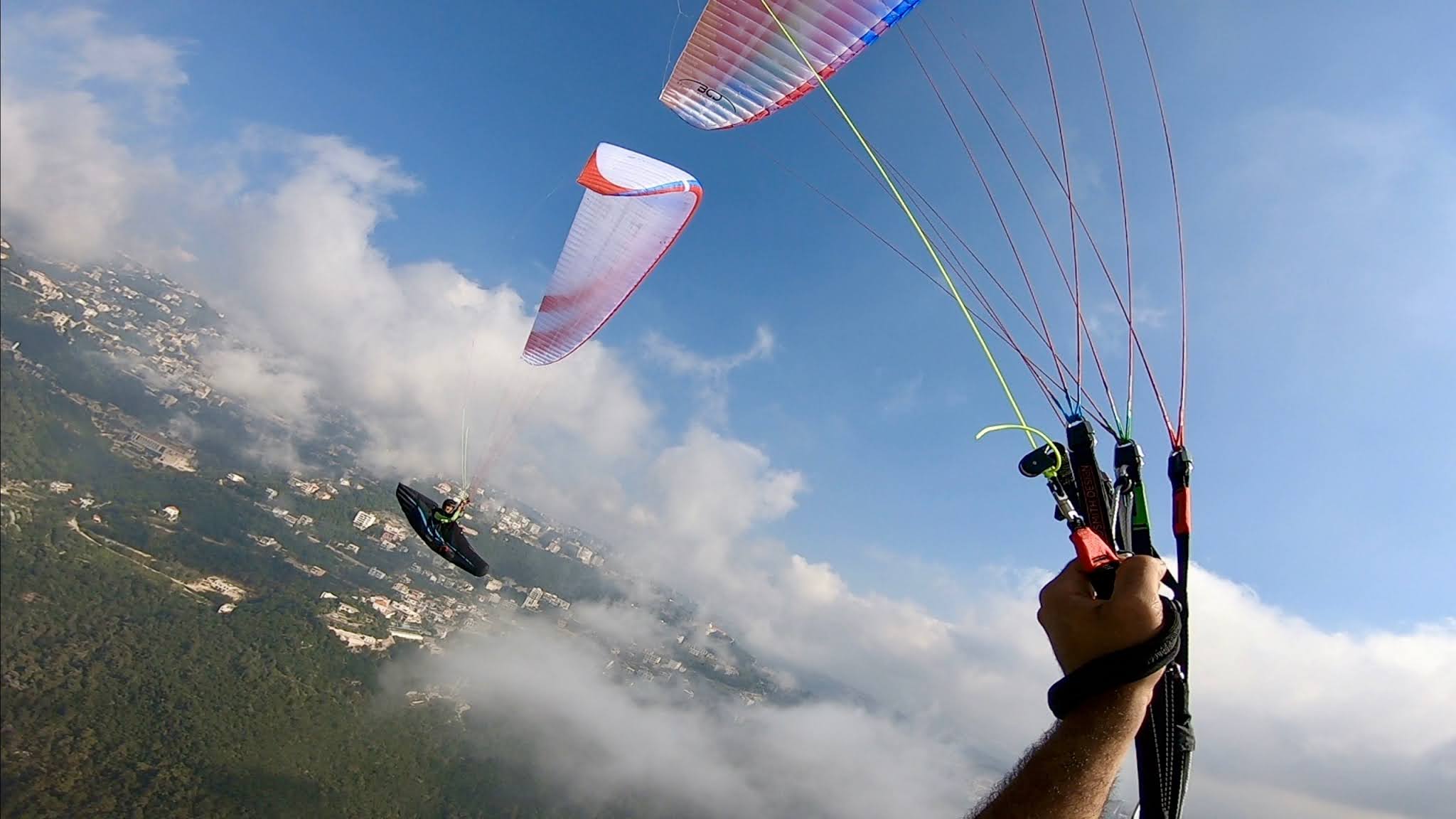
Supair released its new EN-C class glider, replacing the first version of the Savage.  The Savage 2 is a light and hybrid (2.5) line configuration glider that should play at the same level as the NK Artik 7 P.

At the same time, I was delighted to test flying the Skywalk Poison 4 and the X-Alps 6 in the EN-D class, due to the excellent handling they deliver. Now flying the Supair Savage 2 as an EN-C, I think I was blessed to have even a higher step with the ability to dance with the Savage 2, thanks to its impressive, pleasurable handling. How lucky :-)! 

Launching the very light Savage 2 at 91 all up is super easy, as those light gliders deliver an effortless rise.  In the case of the Savage 2, I didn’t feel any dynamic surges, but a docile and easy-to-launch glider. In 30 km/h windy take-offs, it has the dynamics of a C class, but is still very well balanced and easy to control.  

I flew the Savage 2 with the regular Arrow harness. First turn is ( simply...outstanding) 

The brake pressure is on the light side. You need approximately 15 cm to steer the glider, which reacts promptly and swiftly to the pilot's inputs. I liked the Artik 7 P turn, and the Savage 2's turning is just as good, with that butterfly feel under the brakes! So light and responsive!  Getting thermals under the Savage 2 is a total delight! What a beautiful glider to fly in thermals! It's like you don’t want to glide away! You want to squeeze that extra turn, and the Savage 2 does corkscrew, any thermal core, relatively narrow if the pilot wishes. Even in turbulent air, the authority on the brakes is excellent, enabling the pilot to place the Savage 2 wherever he wants inside the air mass. 

One day, after some mind-numbing workdays, I was flying a two-liner, known for its average handling. Still feeling tired, landed, and took the Savage 2 for a spin. After a few minutes in thermals, the Savage 2 feels and handles so beautifully that my mood shifted, and I enjoyed some good XC!  That Savage 2 gave me the pleasure of flying like nothing else. 

The overall movements in pitch and roll are moderately present but still on the dampened side; it doesn’t feel like it bumps into thermals. Instead, it's definitely in the 2.5 line category.  I could feel what the air is doing as the Savage 2 moves on a low movement axis—just the necessary feedback for a sensible pilot to enjoy and feel what’s going on around you. 

Flying for hours won’t make your hands feel tired at all. As I mentioned earlier, the roll movement is there to give you the exact feel in thermals. It's not dampened, nor alive. 

On another day, I was test-flying the new Skywalk X-Alps 6 95+ size, which has good handling, and afterward, I gave it to my friend Milo, who flew it next to me on the Savage 2. Of course, I am not comparing those two gliders, which are intended for different pilot profiles, but it's a good way for me to assess the performance and efficiency of the Savage2. I don't have an Artik 7P available at the moment.

 Gliding in calm air at trim and also at full bar impressed us both! The Savage 2 demonstrated excellent gliding performance for its class. Even at full bar, the glide is phenomenal! We liked it a lot!  The full speed is around 16 km/h over trim! With an excellent glide angle! Hat’s off to Supair for that! 

I also did some glides with other two-liners of higher aspect ratio, and I think the Savage 2, with its hybrid configuration and 6.2 aspect ratio, is not easily left behind. 

What also surprised us was the climb rate. Flying later with different gliders and some of my references for climb, the Savage 2 proved to be a climbing beast! If there’s no heavy air or headwind, it was climbing better than most two liners! Yes…it climbs superbly well… It seems that every weak lift is grabbed by the Savage 2 and converted to climb. It's efficient in weak lift. 

But for sure, when the air is heavy, and in front of a valley breeze, the two liners have the upper hand to surf forward that airmass and climb faster.  As for the 2.5 line Savage2, it actually does more than we asked of it! 

Gliding also, through a headwind, gave the Savage a perfect rating and could easily glide, or possibly outglide, some entry-level two-liners with an aspect ratio of around 6.  

The overall feedback is close to the Artik 7P in pilot demand.  Don’t expect it to be dull and tame.  The Savage 2 will provide educational communication within the airmass. 

There are no excess but fair movements in all axes for a good C pilot. 

Ears can be done with outer A’s. They are stable and reopen without pilot intervention. They could also be done with outer C’s; they are very easy to maintain and reopen quickly once released. Both are efficient to get down.

Conclusion:

Supair didn’t introduce a 2liner yet—instead, a delightful to fly 2.5 line hybrid construction glider. The climb, glide, and speed are excellent. The fun factor it delivers is the optimum gift.  

He who designed and fine-tuned the handling on that Savage two must be a sensible and skilled pilot to deliver that beautiful glider responsiveness! 

If you are the pilot who doesn’t want to get into those two-liners, the Savage 2, with a 3.5 kg payload and a compact packing volume, is a friendly user machine for any expedition, hike, or flight adventure with loads of performance. 

If you are sensitive to handling and brake responsiveness, which makes you feel the glider is an extension of your arms, the Savage 2 is the strongest key. And be sure that whatever flight you take, a big smile is surely guaranteed.  


Thursday, August 13, 2020

Supair SAVAGE EN-C


SUPAIR Savage EN-C

The Savage is Supair EN-C light glider, with an aspect ratio of 6.5. Thin risers, and very well reduced and unsheathed lines all over. It's a beautiful looking glider with that mix of white with red and blue stripes! 

The take-off at 94 is super smooth. Very easy to inflate, and the glider does not overshoot. 

The brake has a moderate to short travel and also with moderate agility. The brake pressure is on the moderate side. 
The Savage seems more agile than the Cayenne 6similarly loaded and less agile than the Taska, or Cure 2 M for example for the same load.  But I felt that I could carve easily every small thermal with some application.  

In rough air with 94 all up, I felt that the Savage is comfortable to fly glider regarding the Aspect ratio! It filters unnecessary movements, and the internal structure seems coherent at least in the moderate mid-day conditions that I flew in. 

It seems to give the same comfortable feel as the Cayenne 6. 
I did some extensive gliding and climbing on the Savage. 
Flying next to my friend on his Cure 2 M at 93 all up, I could say that the Cure 2 has a slightly faster trim speeded, but matching that trim speed on the Savage impressed me with top-end gliding performance!  For several kilometers, I saw that the Savage is indeed a superb gliding machine and that perhaps…it could have a slight edge in gliding power…The surprise came later when we both applied bar. The top speed of the Savage is only 11 km over trim at my load.  With the Cure 2 M matching that speed for a few km, the Savage showed me an even better glide, that could easily match the M7 glide at that speed. 
Re-starting, again and again, those full bar glides on the Savage, made me super sure about its efficiency. Bravo ’SUPAIR’ !!   :-)

I did also fly the Savage at 90 all up, and it seems slower to enter the thermals and in gliding headwind, it seems a bit delayed to surf through. So reloading it again at 94-95, it regains that forward digging. 


We also did lots of climbing or float ability tests next to a Cure 2 M loaded at 93 and Savage at 94 all up. Another good surprise here is that I was able to feel that float ability next to my friend Cure 2, to confirm later that the Savage is super efficient in weak thermals. 
One point is that coring very narrow cores take a bit of practice as the maneuverability is not as the most agile C’s, but good enough to stay up in the air.

Big ears are stable and easy to get in. They reopened with a slight brake input. 

Conclusion: 
In creating the Savage, Supair has entered the golden circle of the best C’s of the moment. 
Supair has created a high performance, comfortable enough to fly, light EN-C machine. The glide and climb couldn’t be placed but on top of that category!  
Please load that marvel at top and test fly it, if your search is toward the light EN-C. 


Tuesday, April 27, 2021

SKYMAN CrossAlps 2 - 24


Skyman Cross 2 Alps 24 

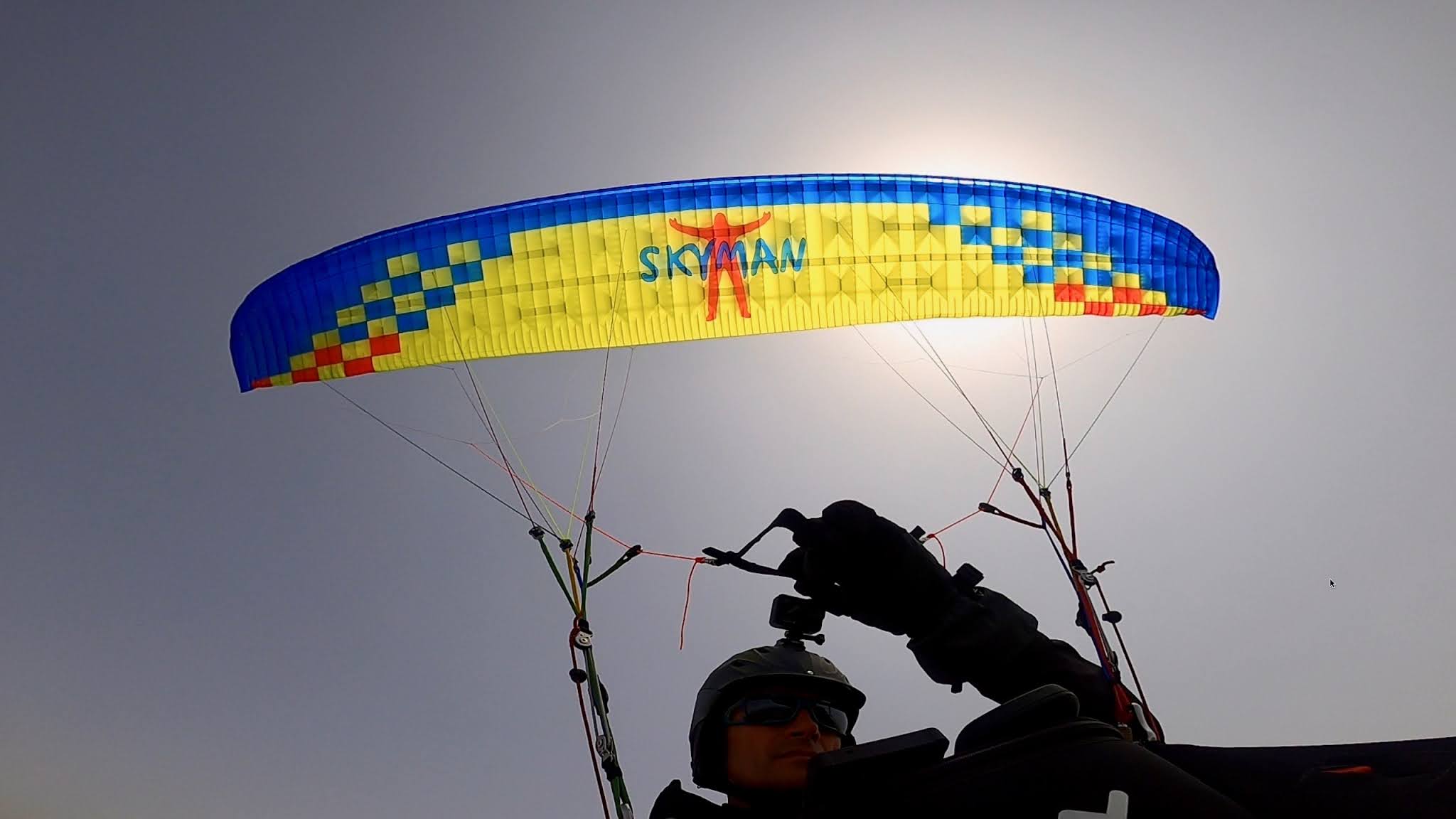
Skyman released their 2021 light EN-C. The CrossAlps 2.  I have here the site 24 and I flew it at 93 all up.

The workmanship on that glider looks very neat.  The light cloth seems the same used on the first version. There are some stainless steel small anchors in the leading edge to prevent the glider is sliding on snowy take-offs. 

The construction looks perfect. The risers are minimalistic, colorful, and properly sewed. (see pic) 

There are 2 A’s, 2 B’s, and 2 C’s! 


Launching the CrossAlps is super easy, even in nil wind. It comes up smoothly and evenly. 

Flying the size 24 at 93 felt very good in overall conditions.  The Cross Alps despite its aspect ratio has a nice authority on the brakes! In this test, I will compare it with the Alpina 4 and mainly the Savage because of the same aspect ratio of 6.5. And will talk also about the difference between the first version and the new one. 

I found out that the CrossAlps can be steered narrower in thermals with a higher authority on the brakes than the Savage.  The A4 felt slightly more maneuverable than the CrossAlps, but it has an aspect ratio of 6.0.

The brakes travel felt shorter than the Savage similarly loaded, and similar to the Delta 4 MS in travel lengths. 

The CrossAlps is a maneuverable glider. My C comparison is updated for the little details if needed. 

In turbulence, the CrossAlps seems also more comfortable to fly than the Savage, and very close to the very comfortable A4 MS. Overall the CrossAlps seems very forgiving and quite manageable for its aspect ratio. The pitch movements are nearly absent, and the roll is very manageable and I could say quite tame for the C category. 


Climb rate> Flying the CrossAlps next to The Artik 6 which has an excellent climb rate, showed me that the CrossAlps is matching the best C’s, even in very weak thermals. I was impressed by the good efficiency of thermals. Probably even slightly better than the first version which had a very nice climb rate.  

Loading it at 95 would enhance the authority in turbulent air and with a neutral pitch, the CrossAlps will climb very well.


Gliding power> I made a few runs next to my reference Cs. The new CrossAlps 2 has I think a complete whole point or more over the 1st version at trim speed.  And close to the good ones in the C category.

 Pushing the speed bar at max, on the CrossAlps gave me around 11 km/h over trim, and could match the Savage top speed.  The pressure is moderate. The glide at trim and at top speed is also mentioned in my C comparison if pilots do want to look for smaller details. 


Big ears with the outer A’s are big, just because there’s only 2 A ’S. They are unstable and a bit difficult to maintain. 

Landing is easy and eventful with a nice flair to land it in tight places. 


Conclusion:  I think Skyman has made a much calmer CrossAlps than the first version. The authority on the brakes is also smoother, less sharp, more forgiving. The ears were better on the first version. The climb rate matches the first version, but the glide is very much improved at trim.  Overall the CrossAlps 2 is a more friendly user glider than the first version. Longer flights with probably 60% less workload than the 1st one! 


Thursday, June 9, 2022

FLOW Freedom 2, S (70-95)


FLOW Freedom 2, S (70-95) 

G’day, mate!  What’s cracking?  Get your eskys and let's see that beauty!  :-) 

I’m still in my deadset  ;-)  …but Aussie slang training…  :-) 


First, I must tell you that I already test flew the older version (Freedom1) and this new high B is nothing close to the old version as if sewn in another dimension! 


The Freedom 2 is built with Porcher Skytex 38g and 32g which gives it a semi-light construction. Liros and Edelrid lines are installed like a hybrid 3-2 liner technology and they are quite a few. 

A shark nose with a 4 ways attachment point on the A’s, reminded me of a 2 liner construction. 


Launching the Freedom 2 at 92 all up on my X-rated 6 harness, with a steady pull, in nil wind it is easy without any hard points. In the stronger breeze, the launching is also nice without any shooting forward. 


The brake travel was 4 cm shorter than my ‘personal preference’, as I fly with a half wrap…So I just length it to 8 cm of gap after the pulley before trailing edge activation.  The factory settings would suit a lot of pilots especially if they choose to fly it at the lower range… 


In this test, I will compare the Freedom 2 with the Chili5 and with the Rush 6 of the same size, that I still have, as I was alternating for three consecutive days and repeatedly flying the R6 and the F2 to feel and see the differences in the same air to describe more accurately.


Now I must write as I did before,  that ‘every’ glider in all categories and of course including the high B category will change in feel after the first 20, or 30 hours! There’s no exception from any manufacturer nowadays as they all use the same type and line width. Some will trim it slightly faster, and it will settle down afterward. Some will do some knots in order to release them later as they feel would be differently related to each glider's stress points.  Most importantly, if you want to retain the same feel as a brand new glider, re0trim it after the first 30 hours.  


My R6 has also changed after 20 hours, so the feel is more tamed. No more spices in surging forward in thermals, and it became slightly reluctant to go into the airmass and calmer than before. That is the case with all the gliders in the B, C, D, and CCC categories…

So I re-trimmed the Rush 6 in my basement, and the next morning after the first flight, the R6 regained all its nice characteristics with the correct spices I felt the first day flying it! …

and the test comparison began…


In the air, the Freedom 2 has a very slightly longer brake travel and is lighter than the Chili5 if similarly loaded.

Similar to the R6 by maybe 2 cm longer …Very close.  The brake travel on the Freedom 2, is very linear and responsive as the Chili 5. There’s a more pleasurable feel through the brakes for the F2 than for the R6! More linear-pull through the brake range. 

The Chili 5 has shorter brakes and is slightly harder. The agility of the brand new Freedom 2 S is excellent! It can be turned even narrower than the R6, and probably similar to the Chili5 (if all are loaded the same! ) 

Now for the boring stuff…  The Freedom 2 turns as narrow as the Chili 5 but gets slightly better into the rising air mass! ( Some pilots would say I’m getting deeeeeep  :-)   , but that’s the way it felt!


Talking about thermal efficiency is the strong point of Freedom 2. The leading edge has a slight pitch forward in thermals as a new glider!  but…I felt that it embraces the thermal… 

With that nice brake authority, I was able ‘easily” to stay in every core!  Why do I say easily…Because it moves forward, climbs well and it stays inside the thermals a bit longer than the others without slipping through with an incredible ability to steer it inside a turbulent thermal wherever I wanted!  

Among those three gliders, I personally enjoyed that efficient glider with its nice brake authority and linear response throughout the range. 


Now if I wanted to go a bit deeper… some will get more bored… :-)   I will say that in very calm conditions and moderate thermals, the Chili 5 will probably have the edge in climbing over the two. But when you have a more complex air hitting you, then the glider that will have an edge would be shared by the Rush 6 and the Freedom 2 as they both move forward and climb. They are good swimmers in the turbulent airmass! 

OK, That’s it! No more Tinny or Stubby today…And I’m not Pissed :-) 


My friend and I also did some long glides with the R6 and the F2. On the trim speed which is the same, if both are similarly loaded, the Chili5 and the Freedom 2 share the same glide which is very close to the R6. A full bar, the Freedom 2 has around 9 km's over trim, and at that speed, both the R6 and the F2 have a very close glide. My B comparison is updated for the small details if needed.


As for overall comfort, I flew the Freedom 2 in some nasty turbulent air and I have now a large idea about it. In strong turbulent air, the Rush6 moves as a block. It has dynamic movements in pitch or roll, for a high B pilot of course, but you feel that complete taught glider above your head even if your chest strap is open to 48..50 cm. 


The Freedom 2 in the same air, works a bit more in itself, with some slight yaw movements roll and pitch. I found that to remove the slight yaw movement a chest strap of 45 cm will erase a lot of them.  Now in a positive way, If you don’t look above your head the feedback coming from the glider is very useful and rewarding! For my personal feel, that’s the glider I choose to fly for high B just because the educational feedback is awesome! I am not saying that the Freedom 2 is a difficult glider to fly! NO, it is not, but it will deliver very nice feedback that is needed to communicate with the airmass. (for a high B of course! ) 

To give you an idea: the 777 Queen 2, or the Supair Savage as a C glider needs 30 % more workload for a pilot to control than the Freedom 2.  And 20 %  less than the Fusion … Feel ok now? :-)  


Now the part of controlling it with the rear risers. I felt that in most cases I was easily able to control the Freedom 2 with the rear risers, especially at bar. Among the 3 gliders, I would say that they are very close in that issue with the R6 being slightly more direct probably due to the C handles placement. The Freedom 2 and the Chili5 are similar in that matter. 


The difference in handling between the Fusion and the Freedom 2 is huge! No comparison…The Freedom 2 has a nimble feel and is more linear through the brakes with direct control. 

Now…IMHO,  these new well-sorted hybrid 3-2 construction, high B’s are a direct competitor for their C’s !!  The Chili5, R6, and now the Freedom 2! 

The Freedom 2  would (probably) out-perform the Fusion…hummmm…. or similar… Don’t shoot the messager! ;-) 

That’s why a completely new era of C’s will emerge…I think.


Ears are stable, easy to induce, and efficient,  they reopen without pilot intervention.

Wing-overs are easy to get and quite impressive. You can feel the energy on that EN’B when doing them!  The stall point is below the hips, near the seating position and it is feelable with a slight stable stall before entry. 


Conclusion: Flying the Freedom 2 as a high B is quite rewarding by the excellent feedback, nice authority on the brakes coupled with a linear pull, and good overall pleasurable handling. 

With the Freedom 2, Flow has delivered a nimble high performance B glider, set to achieve long-distance flights.  All that while having immense pleasure, plus overriding going to a 2021, C glider.

Good on ya!  :-) 


Wednesday, August 11, 2021

Mac Para Elan 3 24

MacPara Elan 3  24. (75-95)

The new C for 2021 from MacPara has arrived. Having flown both earlier versions, I was excited to test fly their latest release. 

Shark nose, The Elan 3 is manufactured using the excellent lightweight materials from Porcher Sport. Skytex 38, Skytex 32 and Skytex 27.  

The lines are made from Edelrid, Aramid Kevlar for the upper lines, PPSL lines for the lower lines.

The construction and details are superb. The risers have a connection between the B and the C for efficient C steering. 


Launching the Elan 3 at 93 all up is smooth and easy. The Elan 3 rises effortlessly without any hard point even in nil wind. If the Delta 4 is sometimes slow to launch, the Elan 3 like the Allegro is easier to inflate. 


Flying with my X-rated 6 at 93,94 all up, the Elan 3 seems fast at trim. Similar to a Bonanza 2 in trim speed and 1-2 km/h faster at top speed. 


I flew the Elan 3 in different conditions, from a strong day in the Cedars spot at 3000 ASL to the lower spots with warm air and inversions at 800 ASL. In all conditions, the Elan 3 felt homogenous without any parasital movements whatsoever. The Elan 3 is very different from the Elan 1 and the Elan 2 in terms of overall feel. While being comfortable to fly for a C, and a very successful DHV rating, with one C, the Elan 3 DNA flies and feels different. The feel under it is like a super easy and comfortable baby Magus. 


The pitch when entering thermals is incredibly efficient without any pitch back at all. A slight pitch forward that pulls you efficiently into the core. The Elan 3 needs a slightly more active pilot control than the Elan 2, Delta 4, but still easy to manage for a C, while giving the pilot an educated but comfortable feedback of the class above without the demanding piloting control a D glider gives.

To explain more, I could say that for pilots who find that flying a Delta 4 or Elan 2 is too dampened in overall feel, the Elan 3 will offer the little extra spice that an educated pilot will cherish for the same comfort, or possibly a 10% more pilot control. 

In turbulent and strong air, the structure felt very solid and very homogenous.

The brake pressure is on the moderate side. I could control the Elan 3 in a moderate 15 - 25 cm of brakes after the first 10 cm of a gap.  It resembles the Alpina 4 brake length with slightly more pressure. 

The agility of the Elan 3 is very slightly less than the Elan 2, but I was very satisfied with its efficiency. 

The Elan 3 has precise brake travel, and I could say that it has more direct control than a Supair Savage, with slightly more agile. Not as agile as an Alpina 4 for example that could core the thermals really tight, but the Elan 3 is not that far, with a much more performance-oriented turning ability.  

Flying the Elan 3, I was able to core every thermal without missing any. The turns are flat without a dive. 


Flying the Elan 3 in moving air showed me the bigger difference, as the Elan 3 has the ability to surf efficiently the moving air mass, and to convert every moving air into the lift. That’s why I wrote above that the feel under it is very different. The Elan 3 was surfing the lift lines and moving forward and upward like the class above! 


Doing some glides in calm air showed me the Elan 3 shares the best glide for today's C, at trim, and at full bar. It is in moving air that the Elan 3 will be more efficient through the airmass. 


Climbing in weak and strong conditions seems also efficient. The Elan 3 has an amazing ability to convert any movement to lift, and that’s exactly its strong point. Even in sudden and strong cores, I could turn precisely the Elan 3 into the stronger core.


Ears are stable, reopen faster with little help. Induced asymmetries kept the Elan 3 on the path and very easy to recover.


Conclusion:

That kind of feel and handling suits my personal flying style a lot. It reminded me of the Trango X-race handling, but slightly mellower in turns and of course tamer in turbulence.

Mac Para has lifted the Elan series to a new dimension and feel. If you have never flown a Mac Para, now is the time to taste that special feel under the Elan 3 !  It is so different from the too dampened older series, but still quite comfortable with that specially added spice.  The difference between the old and the new one is that the Elan 3 will cut through the airmass more efficiently and resembles the upper ratings in that matter! 

The C steering is a bit hard to pull but efficient to keep the Elan 3 overhead in turbulence.

The Elan 3 movements and overall comfort in turbulence target exactly the C category pilots. I think a pilot downgrading from a higher-rated glider won’t lose that special feel under the D gliders while getting the passive safety of the C category. 

A good B pilot with two full seasons in strong conditions will find the Elan 3 as one of the best logical evolution for the solid C category. 


Thursday, October 2, 2025

Skywalk X-Alps 6 / 95 +


Skywalk X-Alps 6 / 95 +


The X-Alps 6 is SKYWALK's new 2026 model and beyond for the lightweight two-liner EN-D glider category. That X-Alps glider was used in the Red Bull X-Alps competition, with a beautiful podium for Simon Oberrauner.
You can see the details of the glider here: https://skywalk.info/project/x-alps6/.

The construction is simple yet beautiful and neat—thin risers, coupled with Edelrid lines.

Launching the XAlps 6 at 94 all up is straightforward, even without wind. With a steady breeze, it inflates rapidly, yet it still feels very compact and doesn’t require many skills to keep it overhead. It feels easy to ground and handle it.
IN the air, the brakes have a moderate pressure. Not tired even after long flights. Just the usual moderate pressure, resembling that of the Zeolite 2 GT. A bit less pressure than the Cure 3, and just a pinch more pressure than the Savage 2 from Supair. Overall, very convenient for my taste.
After the first 10 cm of travel, the X-Alps 6 responds very well, and I can confirm that it has nice agility inside a thermal. The brake authority is smooth, responsive, yet polite. It turns to every command without being too dynamic or too slow. It's perfect for the 6.6 Aspect ratio light D-class glider. 
During my multiple-day testing period under various conditions, I was consistently able to place the glider inside any core at will. So overall, it's pretty responsive and obedient in turbulence and strong air. The authority is high and is given in a balanced manner to the pilot. 

Climbing in weak and strong is quite efficient on the XAlps 6. In weak conditions (less than 1 m/s), I could feel the light thermals and also slow my turn to stay in the weak lift.  The pitch movement is significantly dampened, and the ability to surf the air and move forward is present under the XAlps 6. The Poison 4, or the Zeno 2, for example, has more efficiency in getting through the airmass and moving quickly upfront. The XAlps is, of course, from a different category, but it still moves pretty well, but slightly slower to enter. 
In stronger cores, I felt that the XAlps 6 climbs very quickly, similar to upper-category gliders. Overall, I am personally delighted with its climb rate. 

Performing some glides with the class above, such as the Poison 4, revealed that the XAlps 6 is one step back, and it shares similar gliding performance with the Zeolite 2 GT and Klimber 3P, particularly at trim and at the speed bar. The differences are insignificant for either one. 
Holding the speed bar when gliding through turbulence felt very easy, as the overall movements are dampened, and the B riser, with its moderate pressure, gave me a high ability to control the glider efficiently. 

Overall comfort under the XAlps 6 is high. The pitch is nearly absent. The roll is smooth and balanced. 
Ears can be made with the outer B’s. They are efficient and reopen rapidly. 

Conclusion:
I have flown many light Ds. I liked the Zeolite 2 GT's handling and performance; I cherished the Klimber 3 P's exquisite handling. I also appreciated the Hero 3 and Hero X-ped's brake authority, turn, and feel.
What made the XAlps 6 special for me is that complete package of high usability/ performance/ good accessibility, allowing the C-class pilots to move up a category without having lots of surprises on a D class. 
Adding that pleasurable flying handling is the cherry on the cake! Try it if you are searching for a light but balanced D-class glider! You will be surprised :-)